RUBIG HiPIMS PVD process in the coating chamber – high-performance PVD coatings

HiPIMS:
high-performance PVD coatings

Ionization levels above 90% deliver harder, denser, ultra-smooth films — ideal for cutting and forming tools.

Request a consultation now!

RUBIG comparison: magnetron sputtering vs. HiPIMS in the PVD process (split view)

HiPIMS vs. Arc and DC Sputtering

See the comparison to learn why HiPIMS delivers smoother, lower-defect coatings and provides better protection under high loads.

View comparison

Typical toolmaking applications – HiPIMS coatings by RUBIG

Titanium Nitride (TiN)

TiN is the classic golden PVD coating for tooling—proven, versatile, and cost-effective. With HiPIMS, TiN becomes significantly more capable: denser, smoother, and with fewer defects.

Discover what HiPIMS TiN delivers in real-world applications.

Learn more about Titanium Nitride (TiN)

HiPIMS: high-performance PVD coatings
RUBIG HiPIMS system in the coating center – high-performance PVD coatings

RUBIG is expanding its PVD portfolio with HiPIMS (High Power Impulse Magnetron Sputtering) – a state-of-the-art sub-variant of magnetron sputtering. The core: a latest-generation HiPIMS generator delivers pulse currents of up to 1000 A at 1200 V. The extremely high plasma density increases the ionization degree of the sputtered species to over 90% – comparable to arc evaporation, yet with very few defects. The result is very smooth surfaces and highly densified, hard coating systems with excellent wear and corrosion protection.

What Makes HiPIMS So Special?

RUBIG HiPIMS PVD process in the coating center – plasma inside the vacuum chamber

In HiPIMS, the sputter targets are pulsed with very high power for short periods. This generates a plasma with an exceptionally high ion content. The ionized coating material is precisely accelerated toward the workpiece, resulting in:
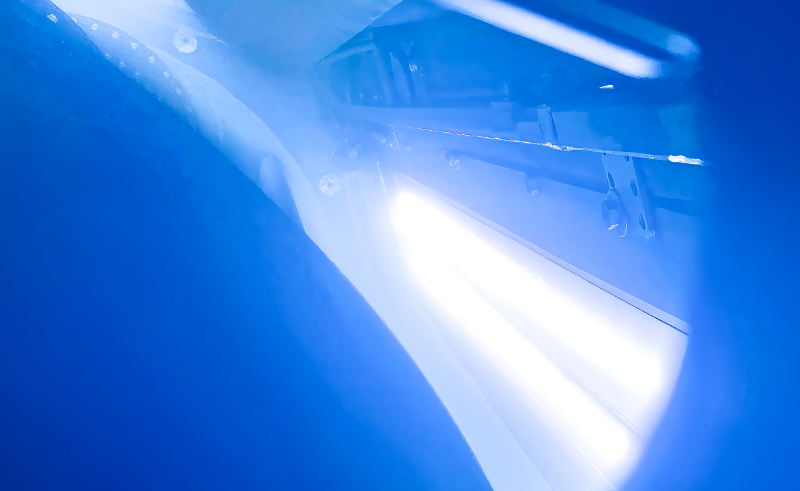
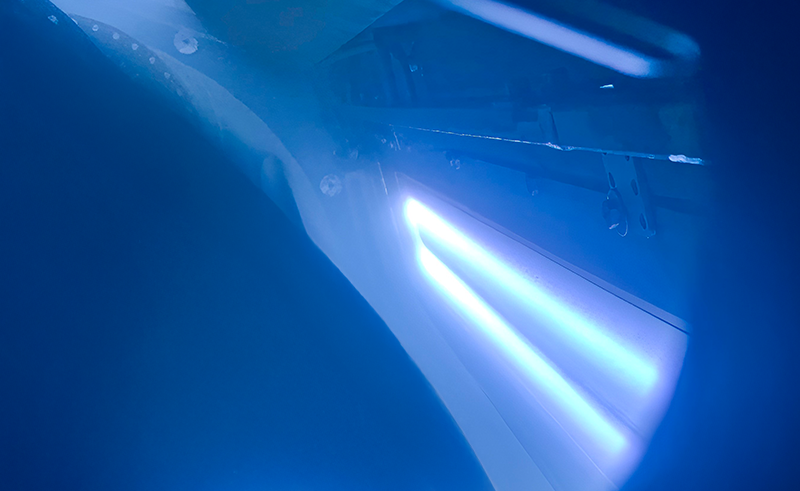
  • Significantly higher coating density (minimized porosity)
  • Superior adhesion (intensive surface activation)
  • Increased hardness and smoother topography (very low defect density)

Discuss HiPIMS use case

Technical Specifications (Excerpt)

  • Process: HiPIMS – High Power Impulse Magnetron Sputtering
  • Power supply: Pulse currents up to 1000 A, up to 1200 V
  • Plasma characteristics: Ionization degree > 90% of the sputtered species
  • Surface quality: very low defect density, very low roughness
  • Coating properties: dense, hard, adjustable low-stress structure

Comparison: HiPIMS vs. Arc and DC Sputtering

 
  • Compared to arc-PVD: similarly high ionization, but with fewer defects → smoother coatings,
    better edge stability, ideal for fine cutting-edge geometries.
  • Compared to conventional DC magnetron sputtering: significantly higher ion current → more energy at the substrate,
    better densification and adhesion, superior protection under high load.
PVD-Prozess: HiPIMSPVD-Prozess: Magnetron-Sputtern

Benefits for Your Application

Cutting tools:

  • Longer tool life
  • Reduced wear (abrasion/adhesion)
  • More stable process windows
  • Even with interrupted cuts
  • Less lubrication required

Forming tools:

  • Reduced cold welding (galling)
  • Lower friction
  • Improved surface quality of parts
  • Extended maintenance intervals

Corrosion & erosion protection:

  • Dense coatings reduce corrosion
  • Reduce cavitation erosion
  • Use e.g. on precision components or molds

“Cutting-edge” of the latest generation

HiPIMS is regarded worldwide as the state of the art for demanding hard and functional coatings. In combination with a next-generation power supply, we unlock a broad parameter window: from adhesion-optimized interlayers through ultra-hard tribological coatings to low-friction top layers—precisely tailored to your substrate and process.

Portrait of DI Dr. Christian Dipolt MBA at RUBIG, expert contact in the field of PVD coatings

how does it fit your application?

From precision parts to tooling: next-generation HiPIMS/PVD.

Get advice on high-performance PVD coatings: better adhesion, smoother surfaces, longer tool life.

Questions about HiPIMS/PVD? We’re here to help!

Request a consultation now

DI Dr. Christian Dipolt MBA

Managing Director RUBIG Technology

+43 (0) 7242 / 211 210

Titanium Nitride (TiN) – the “golden” all-round coating

Typical toolmaking applications – HiPIMS coatings by RUBIG

Take it to the next level

TiN is the classic golden PVD coating for tooling: proven, versatile, and cost-effective. With HiPIMS, TiN delivers a clear performance boost—denser microstructure, fewer defects, and a much smoother surface.

Standard TiN vs. HiPIMS TiN: Microstructure & Hardness

Thanks to the high ionization in HiPIMS, TiN forms a highly densified microstructure (minimized porosity). This results in:
  • Fewer defects → higher process reliability under load
  • Very dense, fine-grained structure → improved barrier performance, fewer micro-chips
  • Smooth surface topography → lower friction, better edge protection

Hardness: Standard TiN vs. HiPIMS TiN

  • Standard TiN: typically around 2300 HV (depending on process/manufacturer)
  • HiPIMS TiN: depending on parameter settings, up to ~3000 HV possible – due to higher densification and improved microstructure

The coating properties stated were achieved under ideal deposition conditions. Depending on surface condition, component size, substrate material, and other process factors, properties on the actual part may differ.
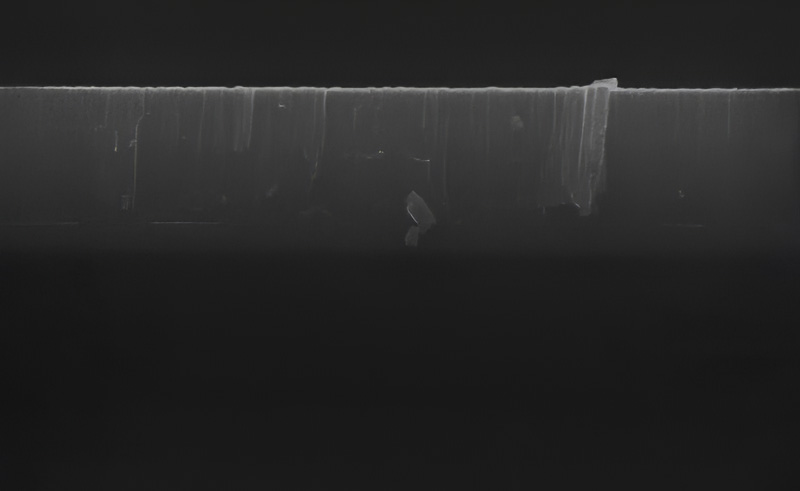
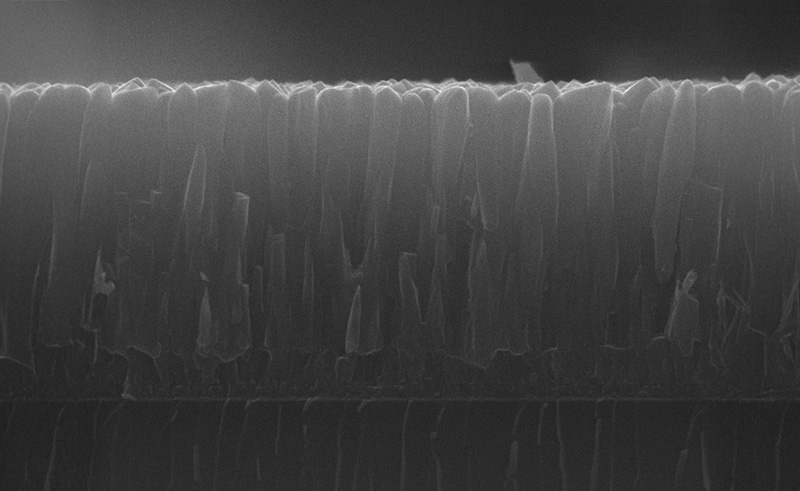
HiPIMS TiN microstructure (SEM)Standard TiN microstructure (SEM)

Typical applications (tooling)

RUBIG HiPIMS high-performance PVD coatings for drilling tools in metal machining
  • Micro end mills / micro drills: very smooth coating, edge stability for fine geometries
  • Indexable inserts: dense structure, reduced abrasive and adhesive wear
  • General machining (steel, non-ferrous metals): lower friction, more stable tool life
  • Forming tools: less galling (cold welding), improved part surface finish